Gå til indhold

Beyond Training: 6 Trends Redefining Pediatric Readiness

Nurse and caregiver checking a young child in a hospital bed

Pediatric emergencies create a readiness challenge in every health system. Children require age-appropriate assessment, equipment, medication, communication, and clinical decision-making, yet the settings in which they receive emergency care vary widely.

In some countries, pediatric emergency medicine is well established; elsewhere, children may be treated by general emergency teams or non-specialists. International reviews continue to identify variation in pediatric emergency training and access to specialist care.¹

What connects these settings is the need to recognize serious illness quickly, act effectively, and coordinate care under pressure. The World Health Organization frames emergency, critical, and operative care as an integrated health-system capability.²

Recent research from low- and lower-middle-income countries makes a similar point: improving emergency care for children depends on individual capability and on conditions that enable teams to act together effectively.

The evidence base differs across countries, and no single model of pediatric readiness applies everywhere. But a common direction is emerging.

The question is moving beyond “Have our clinicians been trained?” toward “Can our people, teams, and systems respond effectively when a child arrives?” 


6 trends are helping reshape that conversation.


1. Pediatric readiness is becoming an organizational capability

Pediatric preparedness can easily be framed as an education problem: make sure clinicians have the right knowledge and skills. That remains essential, but readiness extends beyond the individual.

In the United States, the latest joint guidance from the American Academy of Pediatrics, American College of Emergency Physicians, Emergency Nurses Association, and American College of Surgeons describes pediatric readiness as infrastructure for stabilizing or resuscitating critically ill and injured children. It includes equipment and supplies, policies, staff competencies, patient-safety processes, continuous quality improvement, and administrative oversight.⁴

Although developed for U.S. emergency departments, the underlying principle travels well: a capable clinician can still struggle in an unprepared system.

Is appropriately sized equipment easy to find? Are medication processes clear? Does everyone understand escalation? Are responsibilities clear before an emergency begins?

Readiness depends not only on what people know, but on whether the organization enables them to use that knowledge effectively.


Actions to consider

After your next pediatric emergency exercise, ask two questions:

  1. What did the team do well?
  2. What helped or hindered them?

Look beyond clinical decisions to equipment access, role clarity, medication systems, escalation pathways, communication, and workflow.


2. Limited exposure is increasing the need for deliberate practice

How often teams encounter critically ill children varies by setting. For many clinicians, high-risk pediatric emergencies are not part of everyday practice. 

The U.S. provides one example of the challenge: approximately 70% of emergency departments see fewer than 10 children per day, while more than 80% of children receiving emergency care present to non-children’s hospitals ⁵˒⁶ While health systems are organized differently around the world, literature across different settings similarly describes uneven access to pediatric-focused training and specialist care.¹

Low exposure does not mean low responsibility. 

Simulation can create opportunities to practice deliberately rather than waiting for the right clinical case. A systematic review of pediatric simulation-based education found that simulation can support proficiency and competence through practice in decision-making, knowledge, attitudes, and skills, while also highlighting limitations in scenario validation and outcome measurement.⁷

A separate systematic review of pediatric emergency team training reported improvements in time-critical performance and guideline adherence, although variation in methods limited conclusions about patient survival.⁸

The message is not simply that organizations need more simulation. They need practice built around the risks that matter most.


Actions to consider

Map your highest-risk pediatric events against the opportunities teams currently have to practice them. Where exposure is unpredictable, identify the scenarios, competencies, or workflows that deserve deliberate and repeatable practice.

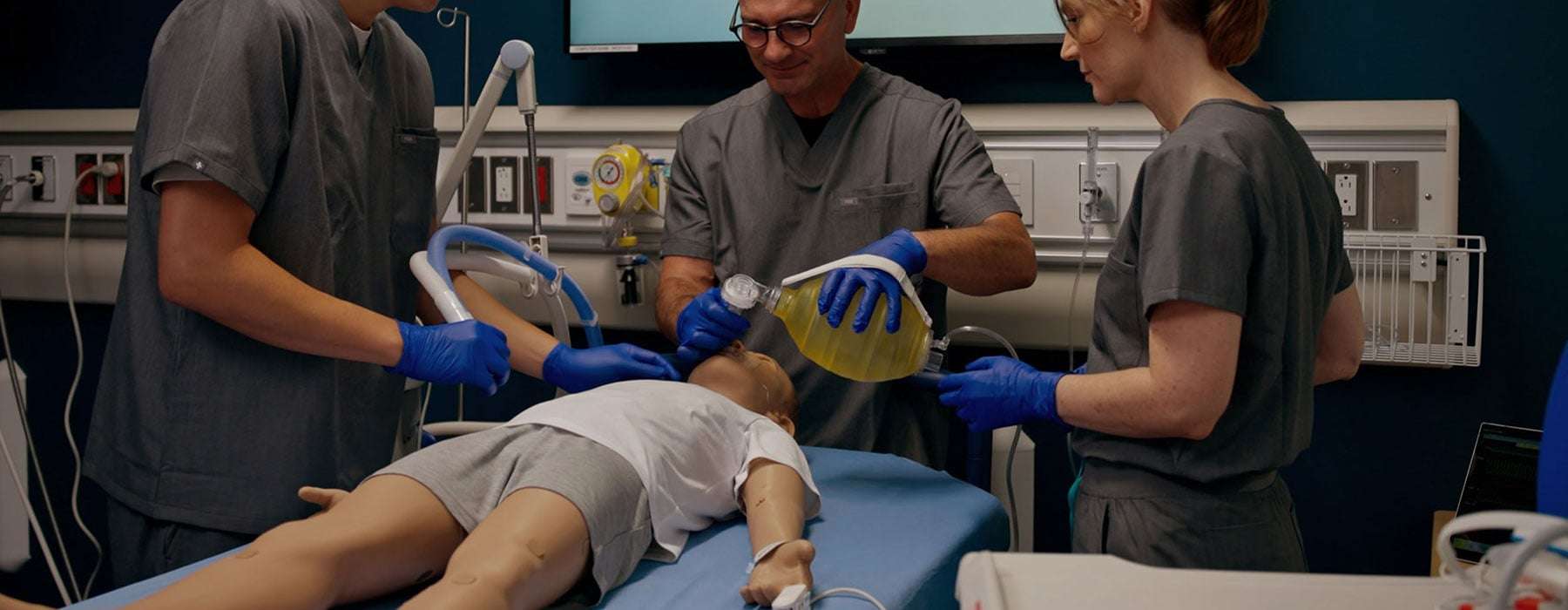
Image of provider adjusting nasal cannula on Sim Junior


3. Realism is being judged by what it enables 

Simulation realism is often discussed in terms of how closely a simulated patient looks, feels, or behaves like a real one. But realism has little value in isolation.

A more useful question is: What does this experience allow the learner or team to do?

Can participants:

  • identify meaningful clues?
  • perform an assessment?
  • make decisions?
  • communicate?
  • carry out the interventions connected to the learning objective? 

Research into pediatric simulation includes scenarios addressing emergency interventions, communication, and decision-making. Variation in scenario validation also reinforces the importance of judging simulation according to educational purpose, not technical sophistication alone.⁷

That changes the question from “How realistic is it?” to “Is it realistic where it needs to be?” 


For one scenario, that may mean clinically relevant assessment findings. For another, it may be equipment placement, staffing, communication channels, or time pressure.


Actions to consider

Before reviewing the features of a scenario or simulation solution, define the decisions and actions participants should be able to perform. Then ask whether the cues, responses, equipment, and environment support them.


4. Team performance is moving to the center of readiness

Pediatric emergencies rarely depend on one person performing one skill correctly. Leadership, communication, situational awareness, task management, and coordination determine how individual competencies come together during care.

A prospective cohort study of interprofessional pediatric resuscitation training found improvements in leadership, teamwork, task management, and overall performance immediately after simulation training. At reassessment 107 to 161 days later, gains in leadership and teamwork were retained.⁹  The study illustrates why teamwork should be practiced intentionally rather than assumed to emerge from technical training. 

Recent global research reinforces this collective dimension. A 2026 realist synthesis examining hospital-based emergency care interventions for children in low- and lower-middle-income countries identified connectedness — collective purpose and coordinated team action — alongside individual capability as a recurring mechanism in successful improvement efforts.³ 


Actions to consider

During your next exercise, assign someone to observe the team rather than the clinical procedure. Examine role allocation, leadership, information sharing, task prioritization, and communication using predefined criteria.


5. Simulation is expanding from education into systems improvement 

One of the most significant shifts in simulation is happening beyond education.

Translational simulation connects simulation with healthcare quality and safety by using it to examine how care environments and processes actually function.¹⁰  That matters for pediatric readiness because vulnerabilities often sit at the intersection between people and systems.

A simulation may reveal inconsistent equipment storage, a handover breakdown, a difficult clinical space, or an unclear escalation pathway.

In these cases, the learning is not simply “the clinician needs more training.” The system itself may need to change.

This also aligns with the wider global direction of emergency care. WHO emphasizes coordinated systems, assessment of gaps, workforce development, essential resources, and quality improvement rather than treating emergency care as a stand-alone clinical skill.² 


Actions to consider

Give simulation findings somewhere to go. Create a pathway for documenting an issue, assigning ownership, implementing a change, and checking whether the problem has actually been reduced.


6. Sustainable readiness requires integration, not isolated activity 

An annual pediatric course can play an important role in preparedness. But no single course can address every competency, team interaction, or system vulnerability.

The Pediatric Readiness in the Emergency Department: Technical Report recommends baseline and periodic competency evaluation, continuing pediatric education, team training, and effective communication, supported through approaches including continuing education, mock codes, simulation, direct observation, and chart review.⁵ 
 
The exact mix will differ by workforce, resources, referral pathways, and local burden. Education, clinical leadership, quality improvement, equipment management, and policy still need ways to connect.

Systematic reviews of pediatric simulation show benefits while also highlighting heterogeneous methods, variable outcome measures, and limited patient-level evidence. ⁷˒⁸

Rather than asking only how much training has been delivered, organizations can ask whether practice responds to identified risks — and whether performance or processes improve as a result.


Actions to consider

Follow one finding from a recent pediatric training activity. Did it stay within the education team, or did it reach the people responsible for clinical practice, quality, equipment, operations, or policy?

If findings stop when the exercise ends, opportunities for broader improvement may be lost.
 

3 questions to take back to your team

1

Where are our most important pediatric readiness gaps?

Consider individual competencies, team coordination, equipment, policies, escalation pathways, and improvement processes.

2

Do our practice opportunities reflect our actual risks?

Compare the events your teams may need to manage with the scenarios, competencies, and workflows they currently practice.

3

What happens after a gap is identified?

Clarify how findings are documented, escalated, assigned, addressed, and reassessed.


Conclusion 

Pediatric readiness will look different across health systems, but the broader direction is increasingly consistent.

Readiness is becoming bigger than training. It is the combination of clinical competence, team performance, appropriate resources, organizational systems, and continuous improvement that allows people to respond when a child needs urgent care.

Simulation has an important place within that model. It can provide access to cases clinicians may rarely encounter, support practice of technical and nontechnical skills, and help teams examine how care processes function. Evidence supports benefits for competence and aspects of team performance, while limitations in the research remind us not to attribute outcomes to simulation alone.⁷˒⁸

Perhaps the most important shift is what happens around the simulation.

When practice is connected to real organizational risks, multidisciplinary teams, and ongoing improvement, pediatric readiness becomes more than an educational activity. 

It becomes an organizational capability — adapted to local realities, strengthened over time, and built before a child arrives rather than assembled after an emergency has begun. 

Key takeaways

  • Pediatric readiness is shifting from an individual competency challenge to an organizational capability.
  • Teams need deliberate practice for high-risk pediatric events that occur infrequently.
  • Simulation is increasingly valued for its ability to improve decision-making, teamwork, and system performance.
  • Team coordination and communication are becoming as important as technical skills.
  • Realistic pediatric simulation can help teams identify and address operational and safety gaps before they affect real patients.
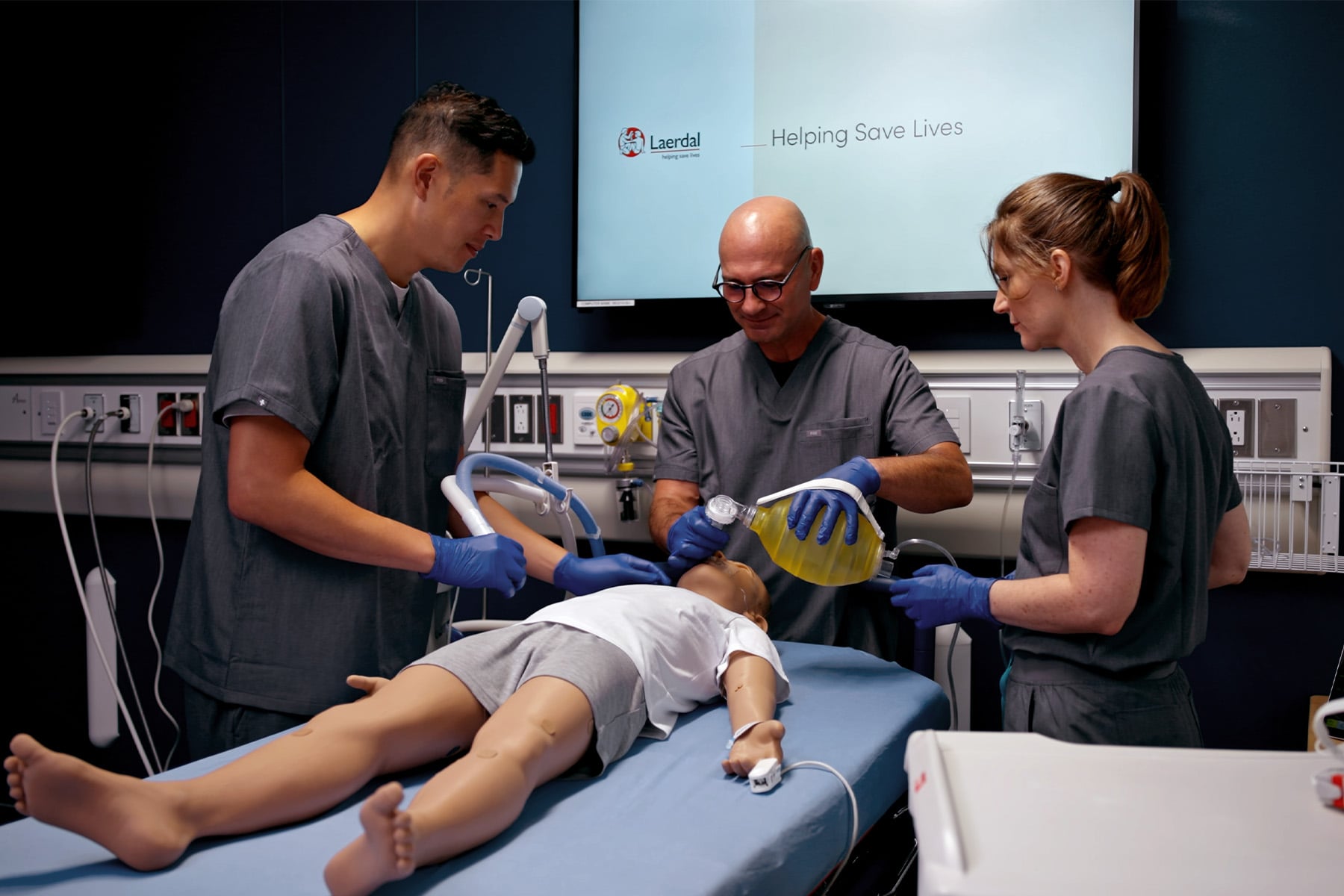
  • Solutions such as SimJunior can support this broader approach by bringing clinical decision-making, teamwork, and system readiness together in realistic pediatric scenarios.

Build your pediatric simulation solution

Vi vil behandle dine personlige kontaktoplysninger med omhu som beskrevet i Laerdal's privatlivspolitik.

References

  1. Gutiérrez, C. E., Lim, R., & Chu, S. (2024). Current progress in international pediatric emergency medicine. Current Opinion in Pediatrics, 36(3), 282–287. https://doi.org/10.1097/MOP.0000000000001355
  2. World Health Organization. (2026). Integrated emergency, critical and operative care. World Health Organization. Integrated emergency, critical and operative care
  3. Subhi, R., Burhin, M., Sogbesan, A., Muramuzi, D., Bakare, A. A., Falade, A. G., Kitutu, F. E., Ssengooba, F., King, C., Dawson-McClaren, B., Bluebond-Langner, M., Kane, S., & Graham, H. R. (2026). From permission to pride: A realist synthesis of how to improve emergency care for children in low-income and lower-middle-income countries. The Lancet Global Health, 14(7), Article 103972. https://doi.org/10.1016/j.langlo.2026.103972
  4. Remick, K. E., Foster, A. A., Jensen, A. R., Williams, R. F., Stone, E., Joseph, M., Conners, G. P., Brown, K., & Gausche-Hill, M. (2026). Pediatric readiness in the emergency department: Policy statement. Pediatrics, 157(2), Article e2025075318. https://doi.org/10.1542/peds.2025-075318
  5. Remick, K. E., Foster, A. A., Jensen, A. R., Williams, R. F., Stone, E., Joseph, M., Conners, G. P., Brown, K., & Gausche-Hill, M. (2026). Pediatric readiness in the emergency department: Technical report. Pediatrics, 157(2), Article e2025075319. https://doi.org/10.1542/peds.2025-075319
  6. Newgard, C. D., Lin, A., Malveau, S., Cook, J. N. B., Smith, M., Kuppermann, N., Remick, K. E., Gausche-Hill, M., Goldhaber-Fiebert, J., Burd, R. S., Hewes, H. A., Salvi, A., Xin, H., Ames, S. G., Jenkins, P. C., Marin, J., Hansen, M., Glass, N. E., Nathens, A. B., . . . Mann, N. C. (2023). Emergency department pediatric readiness and short-term and long-term mortality among children receiving emergency care. JAMA Network Open, 6(1), Article e2250941. https://doi.org/10.1001/jamanetworkopen.2022.50941
  7. Kim, E., Song, S., & Kim, S. (2023). Development of pediatric simulation-based education: A systematic review. BMC Nursing, 22, Article 291. https://doi.org/10.1186/s12912-023-01458-8
  8. Thim, S., Henriksen, T. B., Laursen, H., Schram, A. L., Paltved, C., & Lindhard, M. S. (2022). Simulation-based emergency team training in pediatrics: A systematic review. Pediatrics, 149(4), Article e2021054305. https://doi.org/10.1542/peds.2021-054305
  9. Friedlaender, R. F., Gubert, E. M., Fernandes, C. M. B., Mello, R. G., & Coelho, I. C. M. M. (2025). Evaluation of acquisition and retention of non-technical skills of residents submitted to interprofessional simulation-based training in pediatric cardiopulmonary resuscitation. Jornal de Pediatria, 101(3), 394–399. https://doi.org/10.1016/j.jped.2024.12.003
  10. Brazil, V. A., & Reedy, G. (2024). Translational simulation revisited: An evolving conceptual model for the contribution of simulation to healthcare quality and safety. Advances in Simulation, 9(1), Article 16. https://doi.org/10.1186/s41077-024-00291-6  

You may also like...