
Healthcare Quality Improvement
Healthcare Quality Improvement (HQI) is embracing patient simulation as a powerful tool to enhance team performance and system efficiency.
Learn MoreTurn limited pediatric exposure into meaningful learning opportunities.
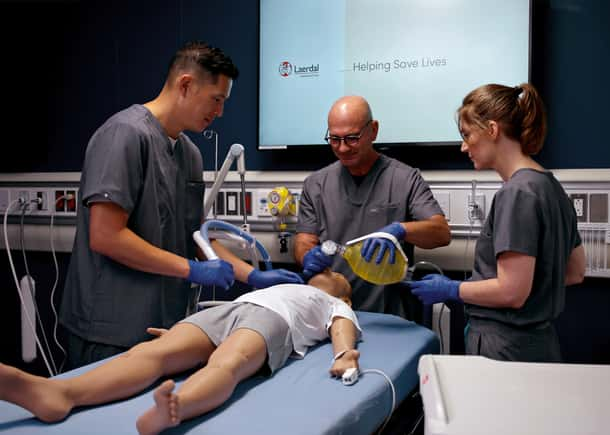
For many healthcare educators, maintaining pediatric competence can be challenging because opportunities to care for pediatric patients are often limited.
Whether you lead a nursing or medical education program, a hospital team, an EMS agency, or a military medical unit, chances to care for pediatric patients can be few and far between. Yet the goal remains the same: maintaining pediatric competence, developing confident healthcare professionals, and preparing teams for rare but critical events.
When pediatric encounters are infrequent and training time is limited, pediatric education can easily take a back seat to more immediate priorities. Yet when a child needs care, providers still need to assess the situation, make decisions, and act. It won’t be an option to say, “We don't see enough pediatric patients to be good at this.”
That makes every pediatric learning experience especially valuable. It needs to feel real enough to engage participants, consistent enough to repeat, and memorable enough to influence how they respond when a child needs care.
The new SimJunior® was designed with that challenge in mind. It can help you make the most of every opportunity to prepare people and systems for pediatric care.
"Every simulation, no matter what it is we’re simulating, is an opportunity for us to get better at delivering care to kids."
Lou Halamek, MD, FAAP
Professor of Pediatrics, Stanford University;
Director, Center for Advanced Pediatric and Perinatal Education (CAPE), USA

When training opportunities are scarce, a simulator needs to do more than look like a child. Learners need to assess, recognize, decide, intervene, evaluate the patient's response, and adjust their care as the clinical situation evolves. The experience should immerse participants in a situation that prompts them to respond as they would in real life.
“The goal of any simulation is for people to do what they would in the real situation,” explains Lou Halamek, MD, FAAP.
The new SimJunior simulates an approximately 8-year-old child and includes clinical capabilities designed to support that level of immersion:
Together, these capabilities create a more believable experience that allows clinicians to focus on caring for the patient rather than the technology itself.
When limited practice time feels clinically authentic, each experience has a better chance of strengthening assessment, communication, decision-making, and response.
Scenarios such as seizures can introduce the clinical urgency, emotional stress, and competing priorities learners may encounter in practice.
“That's a skill that [you don't fully appreciate] until you see it and understand the visceral response that you get when someone is seizing and you know there's a potential for it to go south with an airway situation while a parent is there,” explains Dr. Desiree Díaz, Assistant Dean at Vanderbilt University School of Nursing. “Figuring out how we can compartmentalize our emotions, set them aside, and care for the manikin, as well as monitoring everything else...that's a great feature with SimJunior.”
If you’re in healthcare: Give teams realistic opportunities to recognize deterioration, coordinate care, and respond to pediatric emergencies.
If you’re in professional education: Help fill gaps in pediatric clinical exposure with consistent opportunities to build and assess competence before learners enter practice.
If you’re in EMS: Prepare providers for time-critical, high-risk, low-frequency pediatric situations they may encounter infrequently in the field.
If you’re in the military: Create repeatable pediatric practice when operational demands and limited patient exposure make hands-on opportunities difficult to predict.
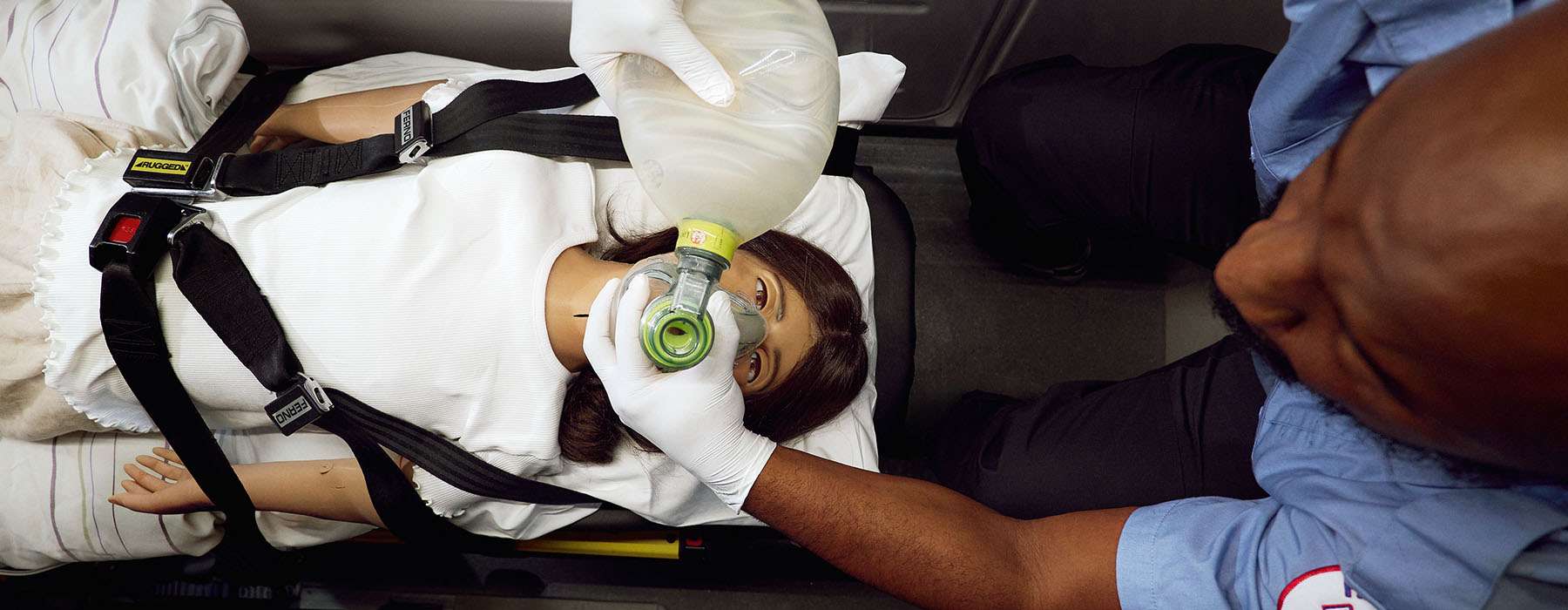
The scarcity of pediatric patients makes every simulation experience all the more crucial—but competence won’t be achieved from a single simulation event. It develops through repeated practice over time. However, when training competes for limited time, space, and resources, even the best intentions can be difficult to sustain.
The easier a simulation is to set up, run, and maintain, the easier it becomes to make pediatric assessment and skills practice routine rather than occasional. The new SimJunior includes several enhancements designed to help you reduce operational burden and support consistent use over time:
These improvements can help educators and simulation teams spend less time managing equipment and more time creating meaningful training opportunities.
This is key when pediatric training already competes for limited time, space, and resources. A simulation that’s easier to run can be used more consistently, giving learners and teams more opportunities to maintain competence.
If you’re in healthcare: Make pediatric practice a more routine part of team development and continuous improvement.
If you’re in professional education: Reduce faculty burden while providing consistent experiences across cohorts.
If you’re in EMS: Run pediatric scenarios more efficiently when training time, space, and resources are limited.
If you’re in the military: Support repeatable training across demanding environments where efficient setup and dependable operation are essential.
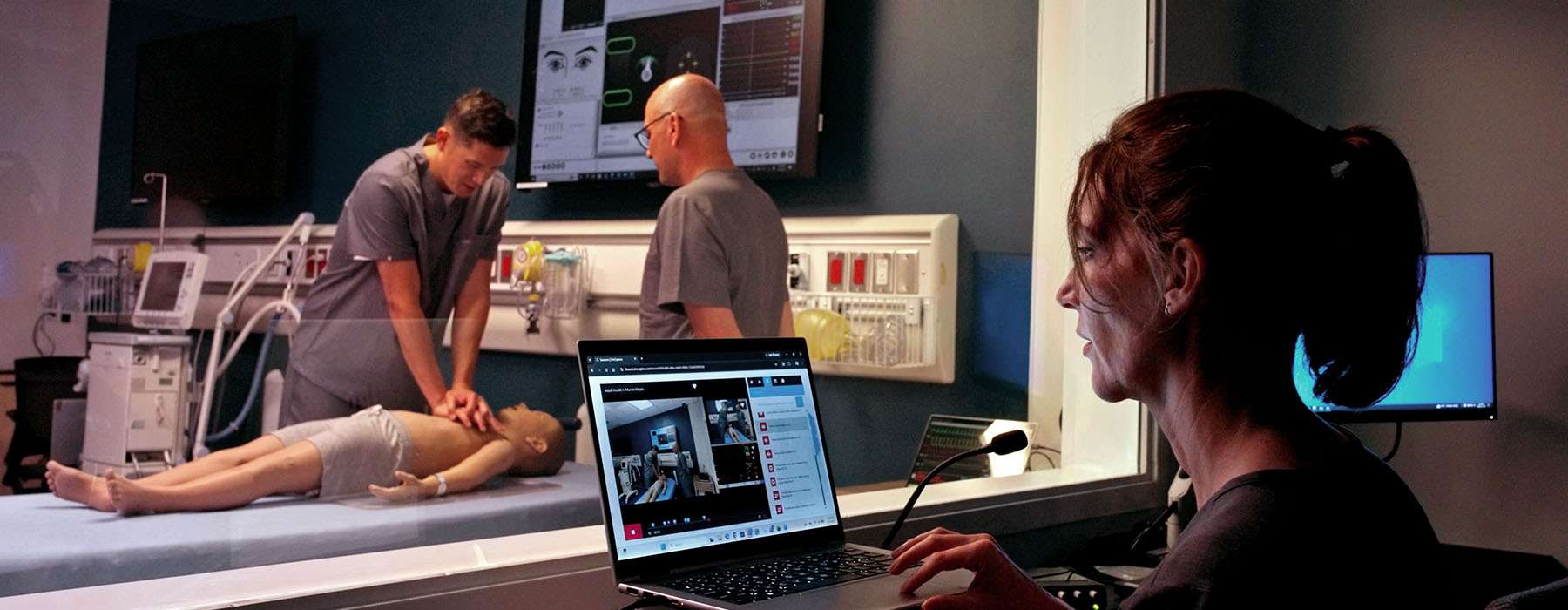
Pediatric preparedness isn’t achieved through isolated simulation events. Competence develops over time as people practice, receive feedback, strengthen skills, and take on increasingly complex challenges.
SimJunior can serve as the foundation of a broader pediatric learning journey supported by tools like:
The goal is to create continuity, not simply add more tools. By connecting foundational skills practice, clinical decision-making, immersive simulation, and ongoing performance improvement, you can build a pediatric training program that develops capability over time and helps make the most of every opportunity to learn.
Pediatric competence isn’t built in a day. It’s built through repeated opportunities to practice, reflect, improve, and perform with confidence when a child needs care.
If you’re in healthcare: Build a culture of pediatric preparedness through continuous practice, performance improvement, and team development.
If you’re in professional education: Reinforce pediatric skills and clinical decision-making through progressive learning experiences across the curriculum.
If you’re in EMS: Build and maintain preparedness for high-stress, time-critical pediatric situations through ongoing practice, feedback, and skills reinforcement.
If you’re in the military: Develop a repeatable learning pathway that supports pediatric competence across changing training needs, roles, and care environments.

Pediatric competence can be challenging to maintain because opportunities to care for pediatric patients are often limited. Whether in healthcare, professional education, EMS, or military settings, providers may encounter pediatric patients infrequently, making it harder to gain and retain experience through real-world practice alone.
Simulation helps improve pediatric preparedness by giving learners and teams realistic opportunities to assess patients, make decisions, provide interventions, and evaluate outcomes in a controlled environment. When pediatric patient encounters are scarce, simulation helps ensure valuable practice opportunities are available.
SimJunior is a pediatric patient simulator designed to represent an approximately 8-year-old child. It was developed to help healthcare educators and organizations create immersive pediatric training experiences that support learning, skills development, and preparedness for pediatric care situations.
The new SimJunior includes features designed to create a clinically authentic experience, including advanced airway functionality, realistic work of breathing, visible chest movement and retractions, accurate auscultation, bilateral assessment capabilities, neurological features such as seizures and electronic eye technology, and full articulation for realistic patient positioning and handling.
The article emphasizes that pediatric competence is not achieved through a single training event. Competence develops through repeated practice, feedback, skills reinforcement, and progressively more complex learning experiences over time.