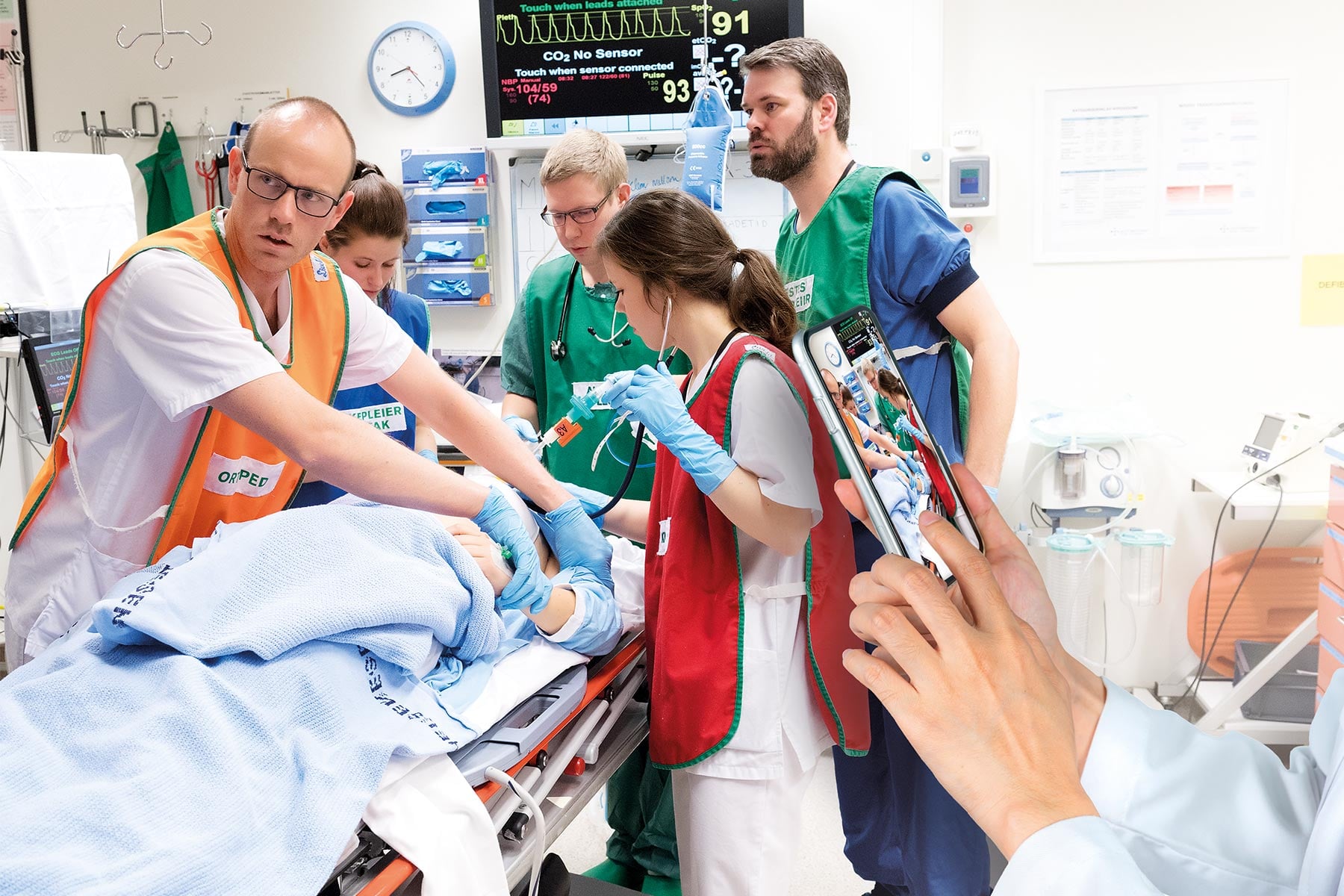
A practical framework for systems-focused debriefing
Dr. Halamek shared the framework his team has used for decades to guide debriefing. The goal is to understand what happened, explore the factors that influenced the outcome, and identify opportunities for improvement.
He described four questions that help structure the discussion:
1. What happened?
The discussion begins with the facts. Before a team can analyze performance or identify lessons learned, everyone needs a shared understanding of what occurred.
2. What circumstances led to that?
Npext, teams explore the conditions surrounding the event. He noted that this question broadens the discussion and encourages participants to consider factors that may have contributed to the outcome.
3. What happened to the patient as a result?
For Dr. Halamek, patient impact remains central to the discussion. This question helps connect observations from the simulation back to patient care and encourages teams to consider how system performance may influence outcomes.
"Participants shouldn’t come to the debriefing thinking we’re going to give them feedback on how well they look after or de-escalate a patient. They’re coming to tell us whether the system is working for them or not."
Dr. Lou Halamek, MD, FAAP
Professor of Pediatrics, Stanford University Director, Center for Advanced Pediatric and Perinatal Education (CAPE)
4. How can we replicate strengths and avoid weaknesses in the future?
The final step focuses on improvement. Teams discuss what worked well, what should change, and how successful practices can be repeated in future situations. Dr. Halamek emphasized looking for both strengths worth replicating and weaknesses that should be addressed.